


.webp)
A great showing. A promising conversation. A buyer who says, “Let me think about it.” Every real estate agent knows this moment – and also knows how easy it is for the follow-up to get lost between property viewings, client calls, paperwork, and travel time. It’s rarely a lack of effort that causes missed opportunities. It’s simply the reality of juggling dozens of leads, conversations, and next steps at once.
Consistent follow-up is where most deals are won or lost. But traditional methods – scribbled notes, scattered chat messages, mental reminders, or manual CRM updates – leave too much room for human error. One forgotten callback or delayed message can quietly turn a warm lead into a lost deal.
That’s why more agents are turning to voice-first automation. By speaking a short voice note after a call or showing, an AI-powered system can create tasks, schedule reminders, and book calendar events automatically. No extra admin. No forgotten follow-ups.
If you’re exploring smarter workflows, an AI Assistant for Real Estate Agents can help transform how you manage leads, follow-ups, and viewings – while keeping your focus on clients, not checklists.
How fast, reliable follow-ups turn leads into clients
In real estate, timing isn’t just important; it’s everything. A buyer who tours a property today is far more likely to convert if they receive a thoughtful follow-up within hours, not days. Sellers expect quick updates. Prospective renters move fast. And investors evaluate multiple opportunities at once. In each scenario, consistent follow-up keeps you top of mind and builds trust long before contracts are signed.
Yet many agents still rely on memory or manual systems to manage follow-ups. A notebook note after a showing. A mental reminder to call someone tomorrow. A CRM update that gets postponed until the end of the week. These methods work – until they don’t. When business gets busy, follow-ups become inconsistent, and opportunities quietly slip away.
This is why a structured real estate follow-up system matters. Not one that adds more admin work, but one that reduces friction. The best systems don’t require you to stop what you’re doing, open multiple apps, or manually enter data. Instead, they adapt to the reality of an agent’s day – driving between properties, answering calls on the go, and juggling multiple conversations at once.
Follow-up automation for agents isn’t here to replace personal connection either. It’s about making sure that no relationship is neglected because of workload. When routine follow-ups are handled automatically, agents gain the freedom to focus on what they do best – advising clients, negotiating deals, and building long-term trust.
Where follow-ups usually break down
Most missed follow-ups aren’t caused by carelessness. They happen because traditional workflows weren’t designed for the pace of modern real estate.
Scribbled notes after showings
Many agents still jot quick notes on paper or in phone apps after a viewing. “Call tomorrow.” “Send details.” “Check financing.” These notes often live in different places and get buried under new information.
Scattered chat threads
Client conversations happen across WhatsApp, SMS, email, and social platforms. Important follow-up cues get lost in busy message histories.
Mental to-dos
“I’ll call them later” works until three new leads appear, a closing needs attention, and later never comes.
Delayed CRM updates
Traditional CRMs require manual entry. When data entry is postponed, the system stops reflecting reality. Once that happens, reminders become unreliable and follow-ups fall through the cracks.
This is where voice notes CRM workflows and AI follow-up assistants change the entire process. Instead of asking agents to adapt to rigid software, modern tools adapt to how agents already work – speaking quick notes on the move.
The new workflow – speak once, let AI handle the rest
Imagine finishing a property showing. You walk back to your car and simply say:
“Follow up with Daniel tomorrow at 9 AM. He liked the kitchen but wants to see comparable listings.”
That’s it. No typing. No app switching. No manual scheduling.
A voice-first AI task manager captures the note, understands the intent, and automatically:
- Creates a follow-up task
- Schedules a reminder
- Adds a calendar event if needed
- Stores context for future reference
This is the core of modern AI for real estate agents – frictionless task creation through natural speech.
To explore the broader workflow behind this, explore all of the features here.
Feature 1
.webp)
Caption: A meeting created instantly from a spoken voice note.
Feature 2
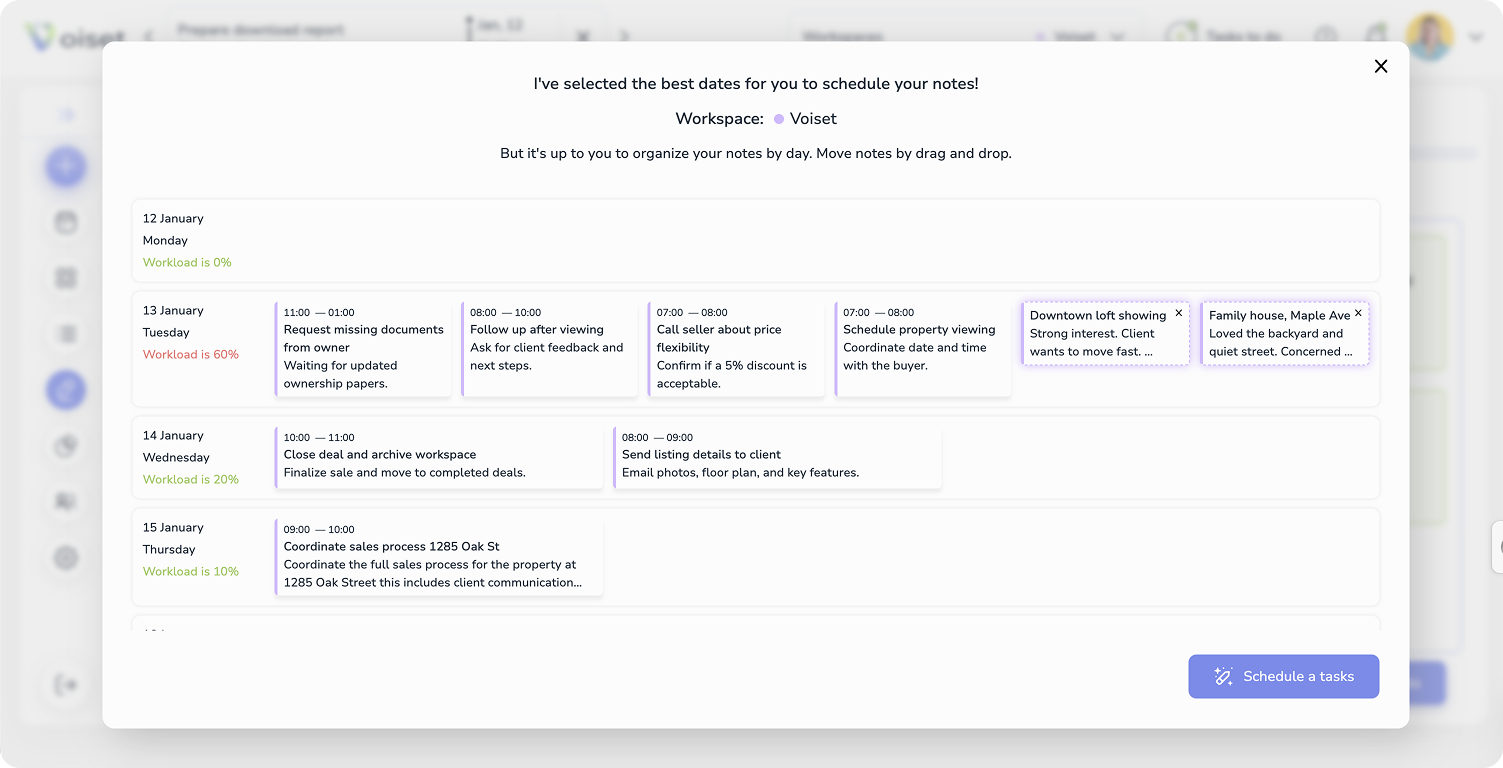
Caption: AI schedules a viewing without manual calendar entry.
Feature 3
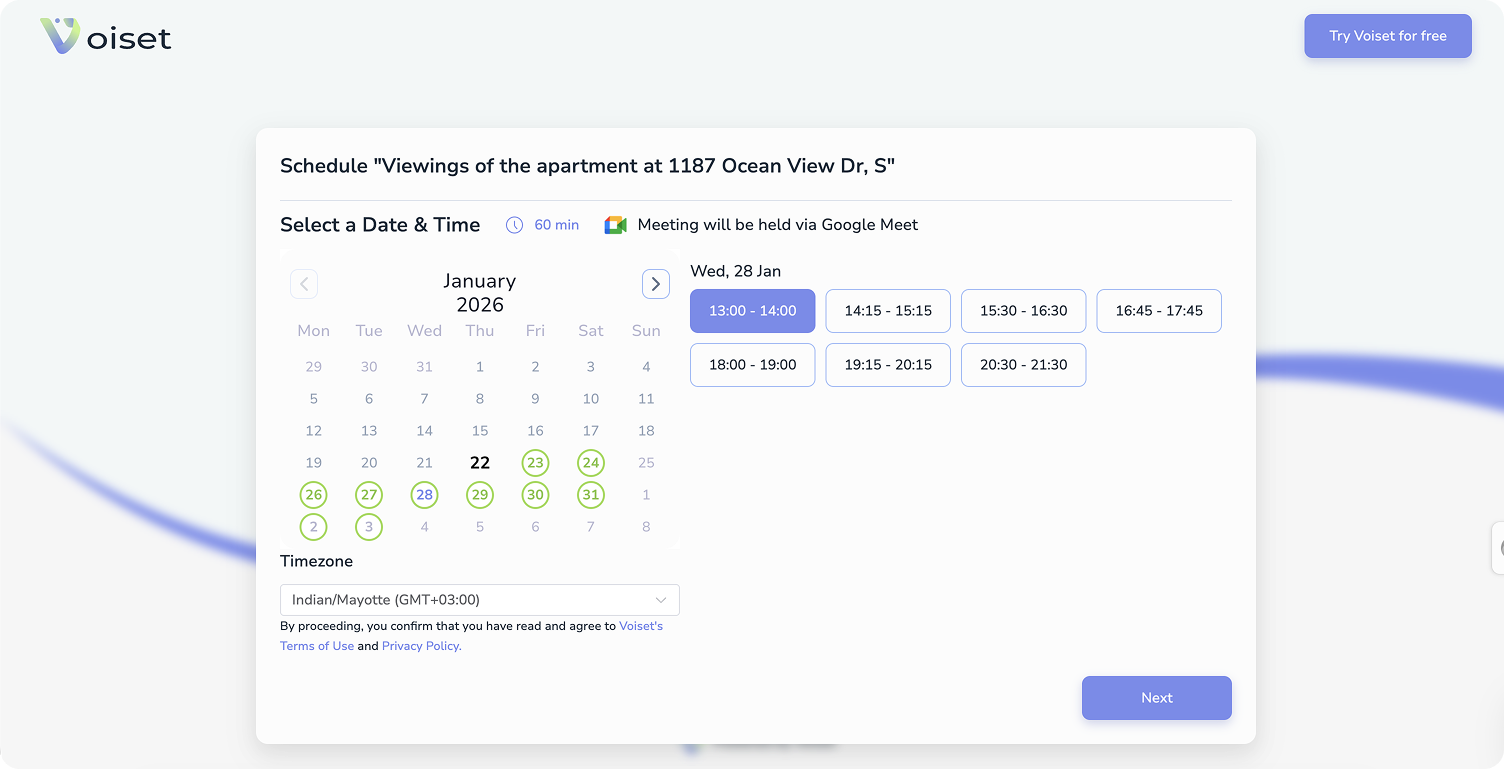
Caption: Smart availability management prevents double bookings.
Feature 4
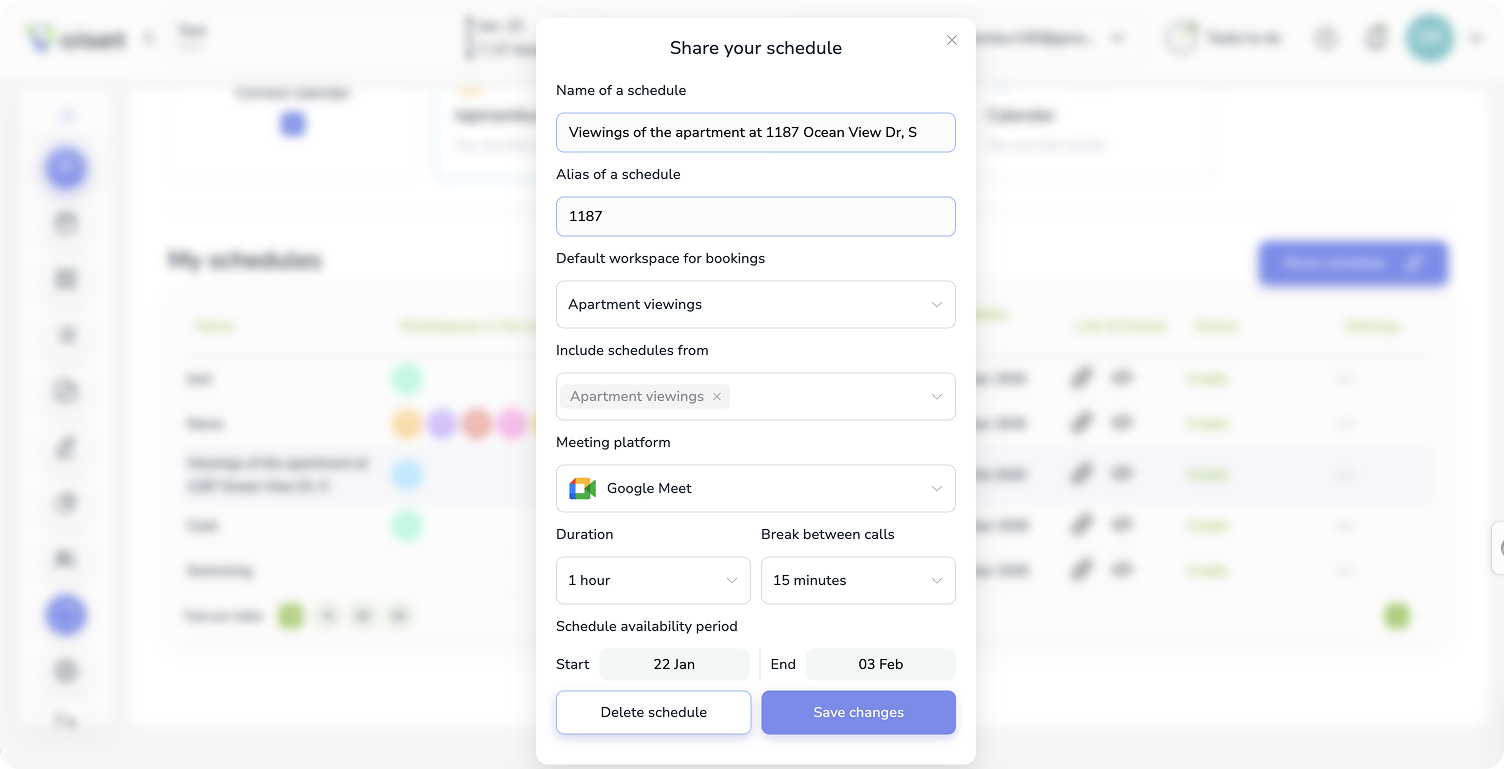
Caption: Share viewing schedules with clients in one tap.
These moments show the real power of voice-driven follow-up automation for agents – the system quietly handles logistics while you stay focused on clients.
Because the workflow is voice-first, it works naturally during commutes, between meetings, or immediately after client interactions. No desk time required.
What agents say vs. what the system creates
To understand how a voice notes CRM workflow feels in practice, here are realistic examples.
Agent says:
“Follow up with Sarah tomorrow at 10 AM about the Oak Street listing.”
System creates:
- Task: Follow up with Sarah
- Reminder: Tomorrow at 10 AM
- Calendar event booked
- Context note saved: Oak Street listing discussion
Agent says:
“Send viewing feedback form to Michael and remind me to call him Friday.”
System creates:
- Task: Send feedback form to Michael
- Reminder: Call Michael on Friday
- Follow-up task linked to contact record
Agent says:
“Schedule a second viewing for the Rivera family Saturday at 2 PM.”
System creates:
- Calendar event: Second viewing – Rivera family
- Confirmation message ready to send
- Reminder notification before the appointment
Agent says:
“After open house – follow up with all attendees tomorrow afternoon.”
System creates:
- Group follow-up task
- Scheduled reminder
- Optional templated outreach message
These examples demonstrate why AI follow-up assistants feel less like software and more like an invisible operations partner. You speak naturally, and the system builds a reliable real estate follow-up system in the background.
Best practices for building a consistent AI follow-up system
Voice-first automation works best when paired with a few simple habits. These practices help agents get the most from AI task management tools.
Record voice notes immediately
Capture next steps right after a call or showing while details are fresh.
Use clear phrasing
Simple language like “Follow up with…” or “Schedule…” helps the AI interpret intent accurately.
Set default follow-up windows
For example, always follow up with new leads within 24 hours. Let the system automate timing.
Review your task list daily
A quick morning scan keeps priorities aligned.
Trust the system
Avoid duplicating manual notes once voice workflows are in place.
Keep client context in voice notes
Mention property names, preferences, or objections so information stays attached to the task.
These habits take minutes to adopt but dramatically improve consistency. Over time, agents spend less energy remembering what to do next and more energy nurturing relationships.
Why AI follow-up systems beat traditional CRMs
Traditional CRMs were built for desk-based work. Modern agents are rarely at their desks.
Voice-first AI task management tools solve several long-standing CRM problems:
No manual data entry
Tasks and reminders are created through speech instead of typing.
Always up to date
Because updates happen instantly, the system reflects real-time activity.
Designed for mobility
Perfect for agents driving between showings.
Faster response times
Automated reminders ensure leads receive timely attention.
Reduced cognitive load
No need to remember dozens of follow-ups.
Better client experience
Consistent communication builds trust and professionalism.
This is why AI for real estate agents is becoming a competitive advantage rather than a novelty. The agents who respond faster, follow up reliably, and stay organised win more referrals and repeat business.
The compounding effect of better follow-up
The true power of follow-up automation for agents is all about both efficiency and consistency.
One extra follow-up per week turns into:
- More nurtured leads
- More conversations
- More booked viewings
- More closed deals
- More referrals
Over months, this compounds into a noticeable business advantage. Not because of harder work, but because fewer opportunities fall through the cracks.
Voice-first AI makes this consistency achievable without burnout. Instead of adding another system to manage, it quietly supports the work you already do.
Modernize your real estate follow-up process with AI
In real estate, success is rarely about one big moment. It’s built through dozens of small, timely touchpoints – the follow-up call, the reminder message, the scheduled second viewing. When these steps happen consistently, trust grows and deals follow.
AI voice notes transform follow-up from a mental burden into an automated workflow. Speak once, and your tasks, reminders, and schedules take care of themselves. No forgotten leads. No missed opportunities. Just a smoother, more reliable way to manage client relationships.
If you want to see how a voice-first AI assistant for real estate agents fits into everyday workflows and stops you losing follow-ups, then explore Voiset today.

