
You don’t need to “be more organized.”
You need a place that keeps up with how your brain actually works. Say everything at once. The system sorts it out for you. Your brain works at 160 km/h. Most apps expect 40. This one listens instead.
ADHD or Attention deficit hyperactivity disorder working memory drops information quickly — especially under stress or distraction.
When ideas aren’t captured immediately, they’re gone.
Adding friction (typing, categorizing, choosing fields) makes it worse.
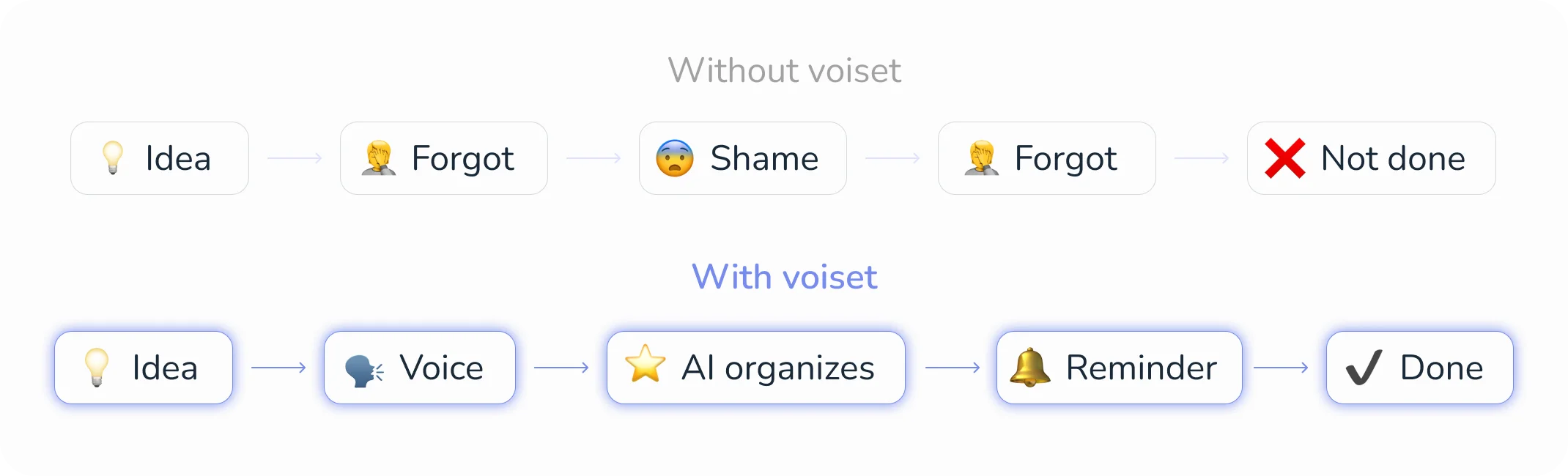
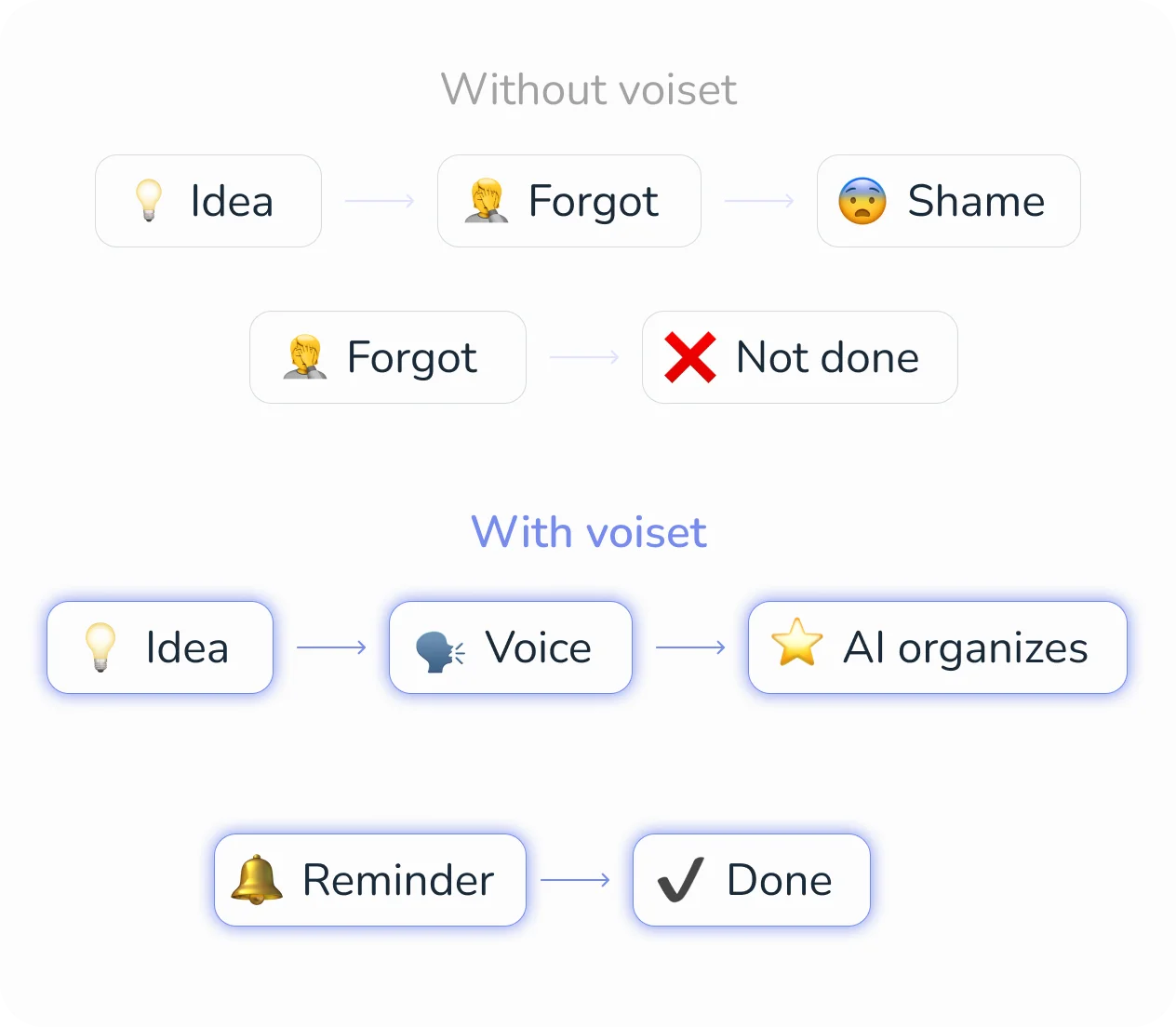
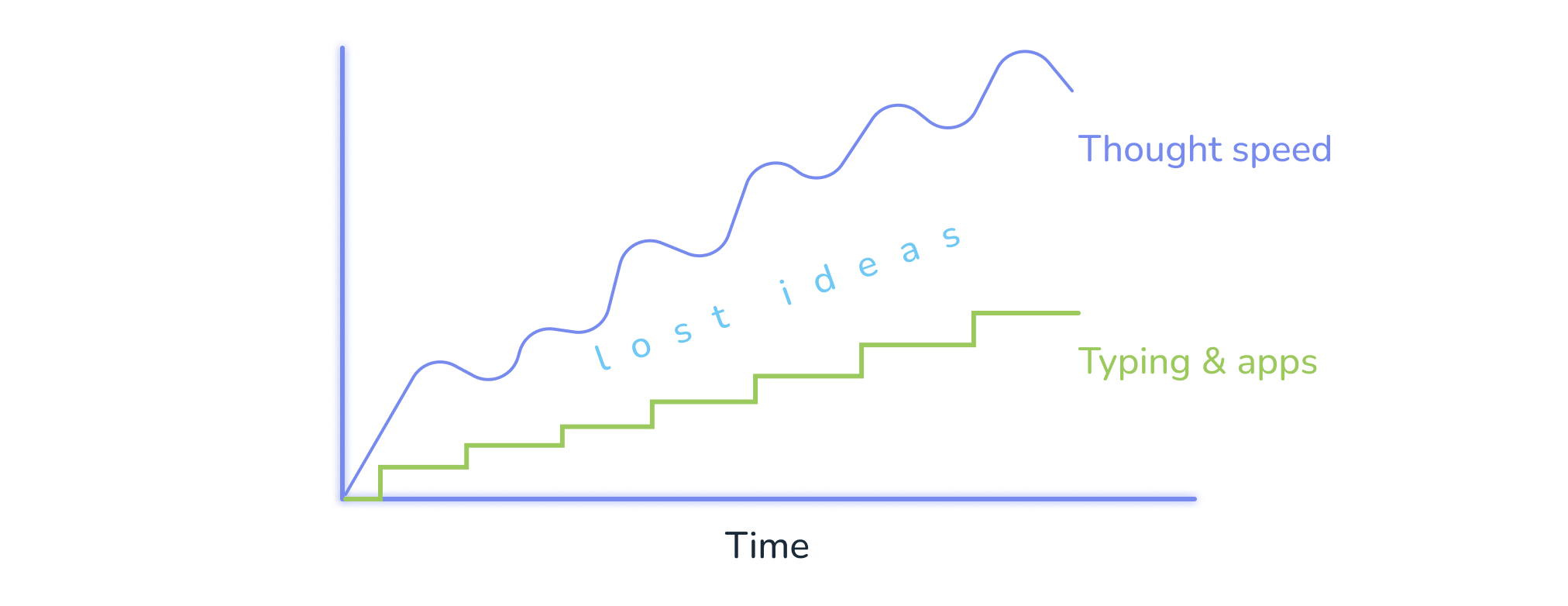
Thoughts appear instantly, but typing, navigating apps, and choosing fields slow everything down.
That gap is where ideas disappear — not because you don’t care, but because the system can’t keep up.
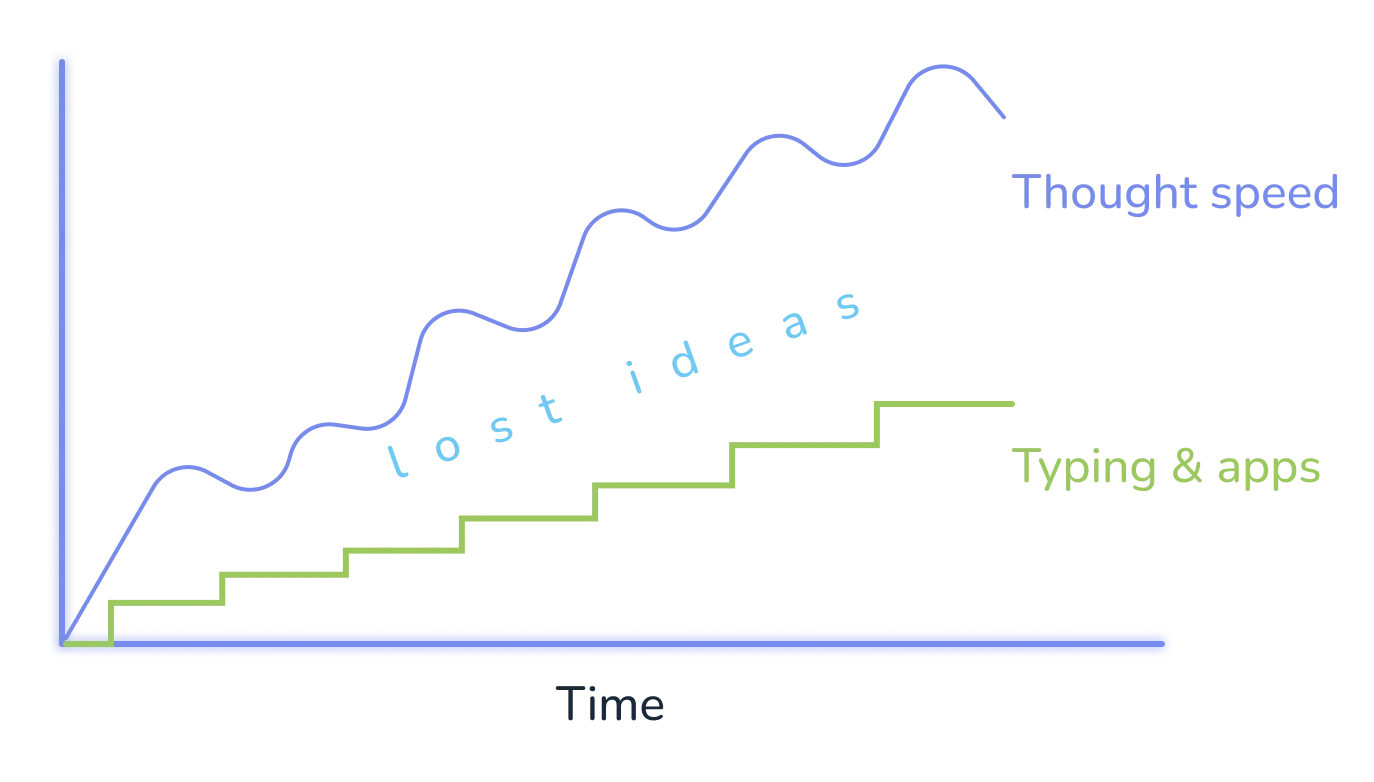
Fast thoughts, missed details, and unfinished plans are a shared experience for many people with ADHD. It’s not a lack of effort — it’s how the brain processes information when everything moves at once.
Let your thoughts rest
“I forgot what I just wrote”
Thoughts don’t disappear because they’re unimportant.
They disappear because working memory resets quickly — especially when you’re interrupted, moving, or multitasking.

Friction kills ideas
Open app → find the right field → choose a list → type.
That’s already too many steps. By the time the app is ready, the idea is gone. The problem isn’t motivation — it’s friction at the wrong moment.

Knowing what to do isn’t the same as doing it
You can clearly see the task in your head — but starting feels heavy.
This isn’t laziness or lack of discipline. It’s executive dysfunction: when the brain struggles to turn intention into action.That thought never helps.
If a task keeps getting postponed, it's not laziness — it's just too big. Break it down into short, manageable subtasks. Small actions are easier to start, and together they lead to results.
.webp)
It’s not a neat to-do list. It’s a fast, messy stream of thoughts that shows up when you’re walking, driving, lying in bed, or already late.
You don't think in terms of tasks — you think in terms of fragments:
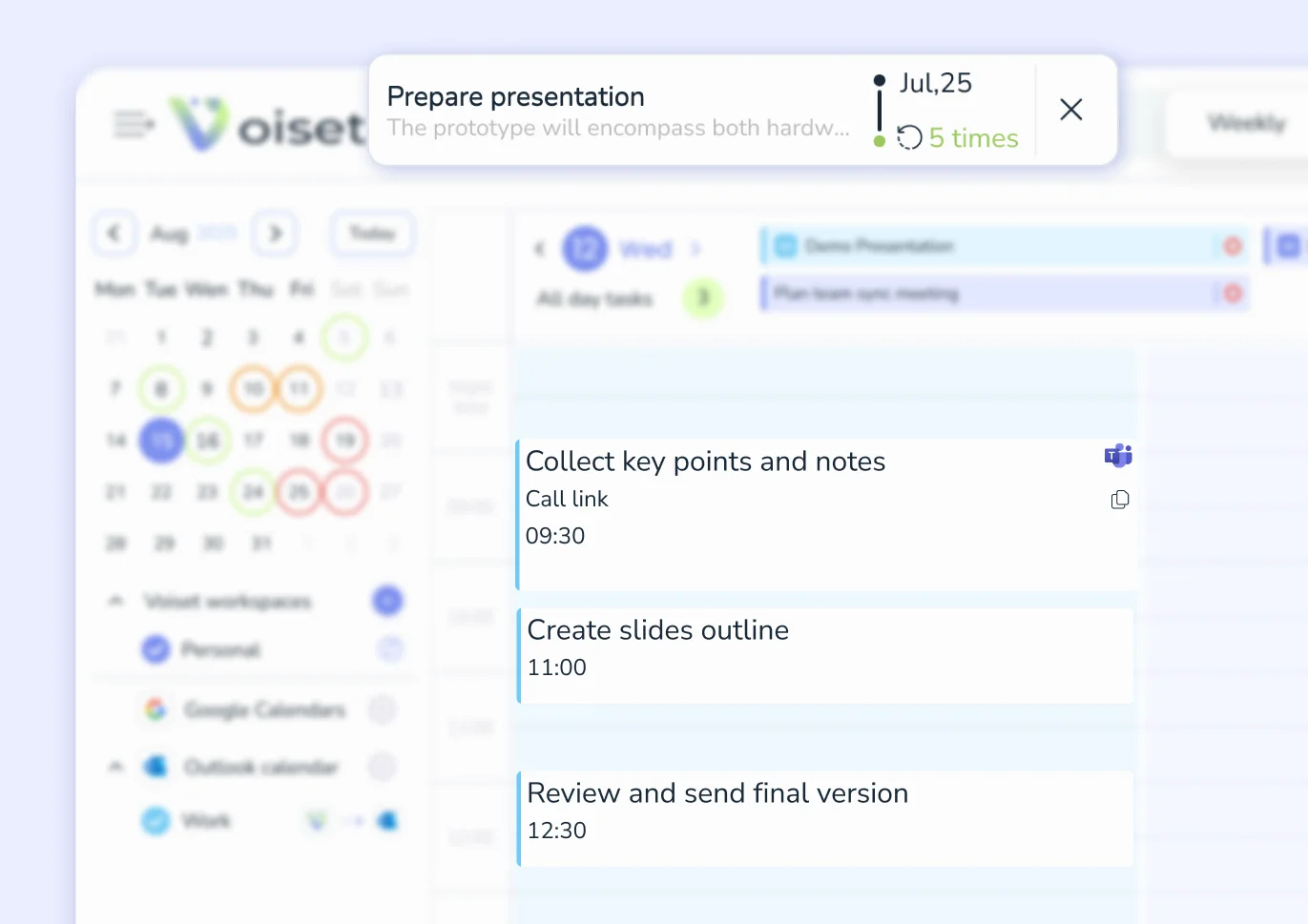
Just say: “I need to email the client tomorrow, buy coffee on Friday, call my mom — but not during work hours, and prepare the presentation.”
It’s not a neat to-do list. It’s a fast, messy stream of thoughts that shows up when you’re walking, driving, lying in bed, or already late.
You don't think in terms of tasks — you think in terms of fragments:
Just say: “I need to email the client tomorrow, buy coffee on Friday, call my mom — but not during work hours, and prepare the presentation.”
Start a brain dump
Your mind moves fast. Most planning tools don’t.
This is a different approach: speak your thoughts as they come, and let the system organize them outside your head — calmly, automatically, without friction.
When everything lives in one list, it all feels urgent — and overwhelming.
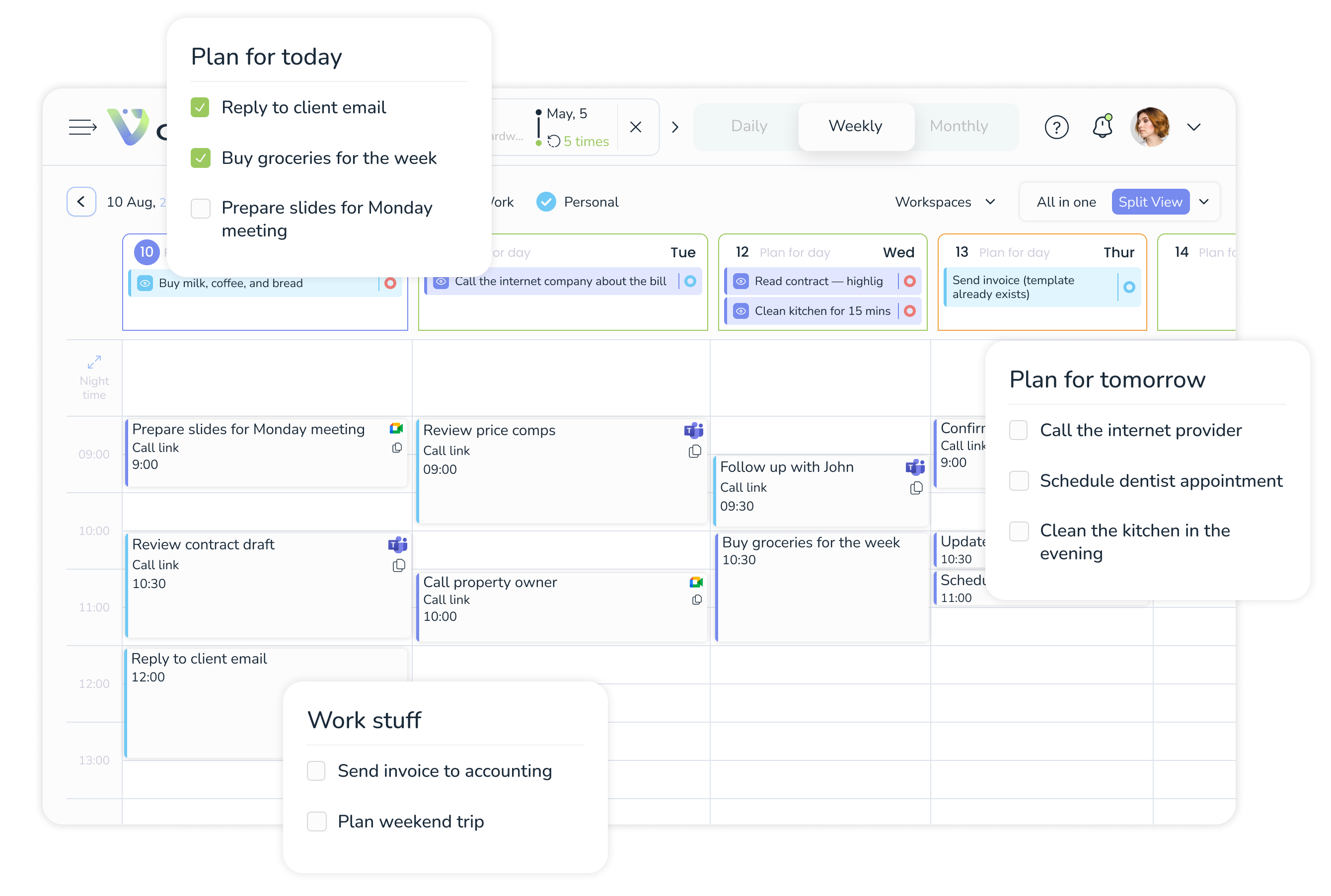
Workspaces let you keep things apart: work, personal life, family, side projects — each with its own schedule and rhythm. You don’t need to remember where things go. The system keeps context for you.


ADHD brains struggle to retain ideas during transitions — such as opening apps, switching tabs, or copying things around.
Connected calendars via smart planner mean your tasks and events already live where you need them. One place to check. One place to trust.
ADHD brains lose ideas during transitions — opening apps, switching tabs, copying things around.
Connected calendars and tools mean your tasks and events already live where you need them. One place to check. One place to trust.
Knowing what needs to be done doesn’t always make it easier to start.
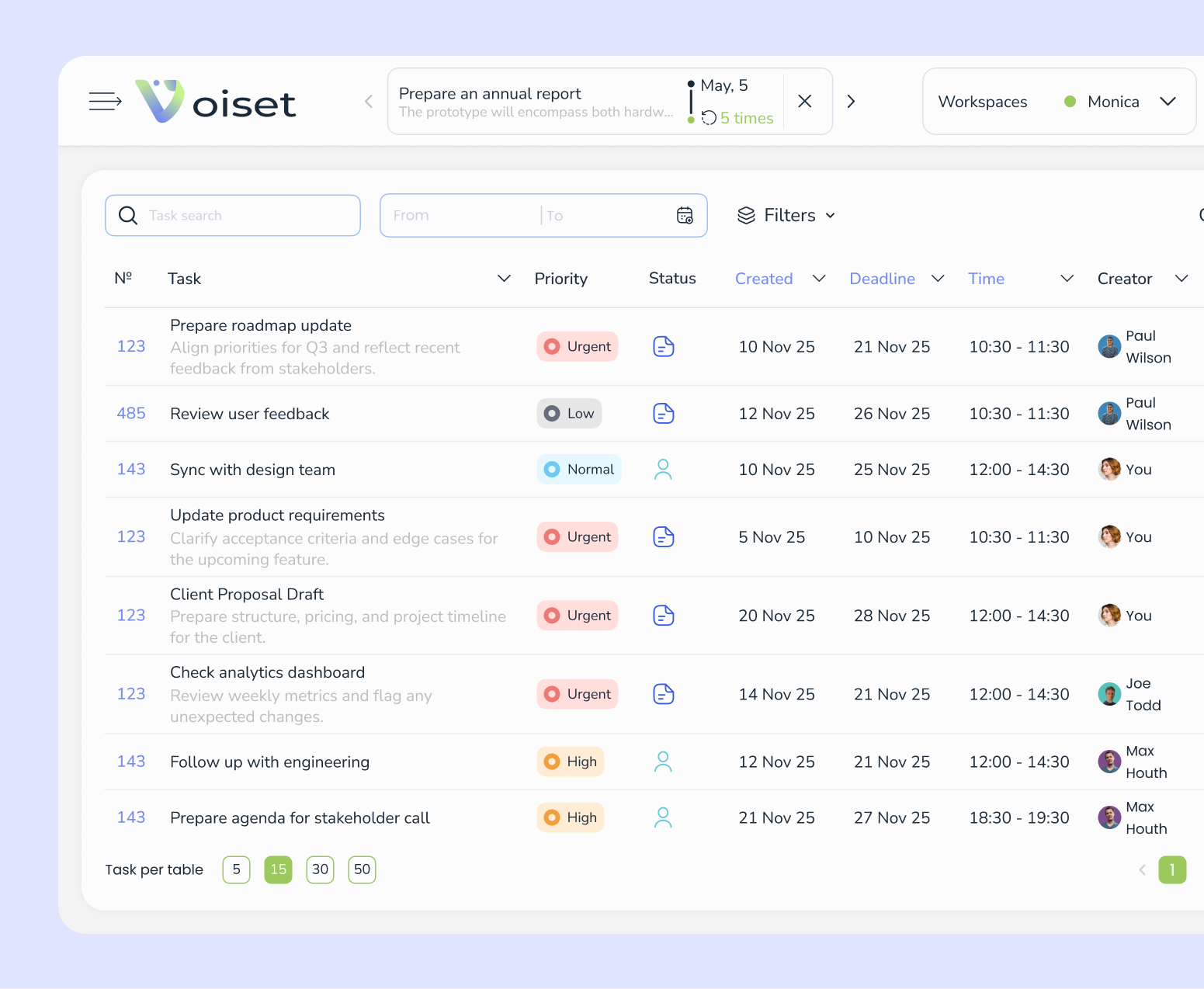
The planner looks at your workload, deadlines, and energy patterns to suggest a realistic plan — not an ideal one. You stay in control. The system just helps you begin.
ADHD isn’t a motivation problem.
It’s a friction problem — and friction can be removed.


